The ongoing escalation between the United States, Israel, and Iran has triggered one of the most severe energy supply disruptions in modern history. With Iran’s actions effectively halting traffic through the Strait of Hormuz, the world faces historic oil shocks, surging commodity prices, and mounting calls for de-escalation.
The Strait of Hormuz Crisis
The Strait of Hormuz, a narrow waterway handling roughly 20% of global oil and significant LNG flows, has become the epicenter of the crisis. Iranian threats, attacks on vessels, and insurer withdrawals have led to a near-total de facto blockade.
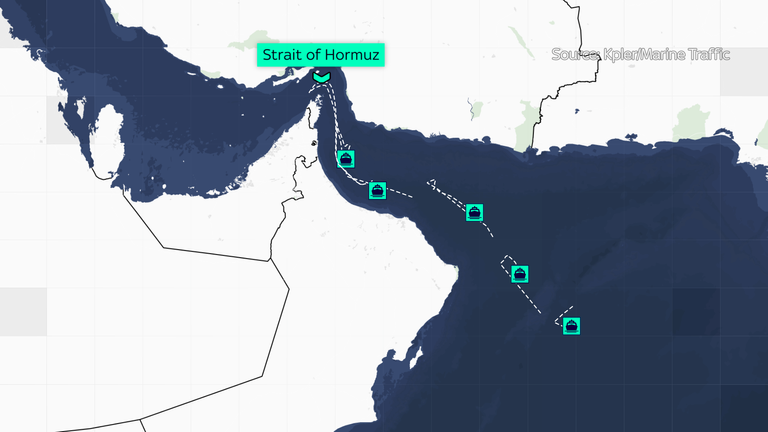
This has stranded tankers and removed approximately 20 million barrels per day from global markets—equivalent to a fifth of worldwide consumption.
Oil Price Surge
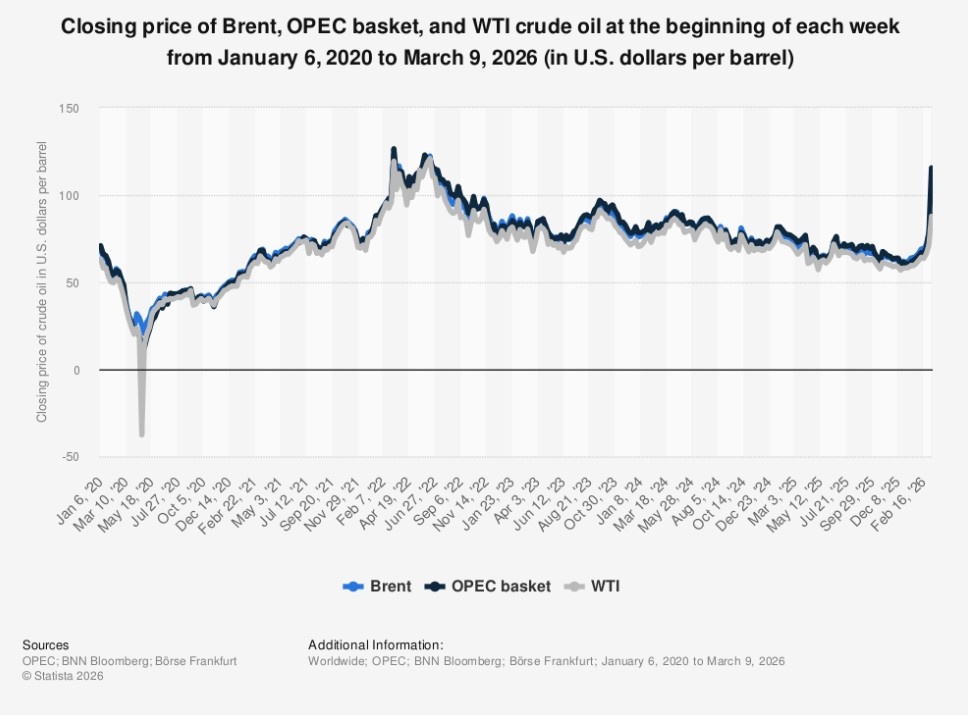
Brent crude and other benchmarks have skyrocketed, with prices jumping from around $70 to peaks near $110–120 per barrel in early March before settling in the $90+ range amid volatility.
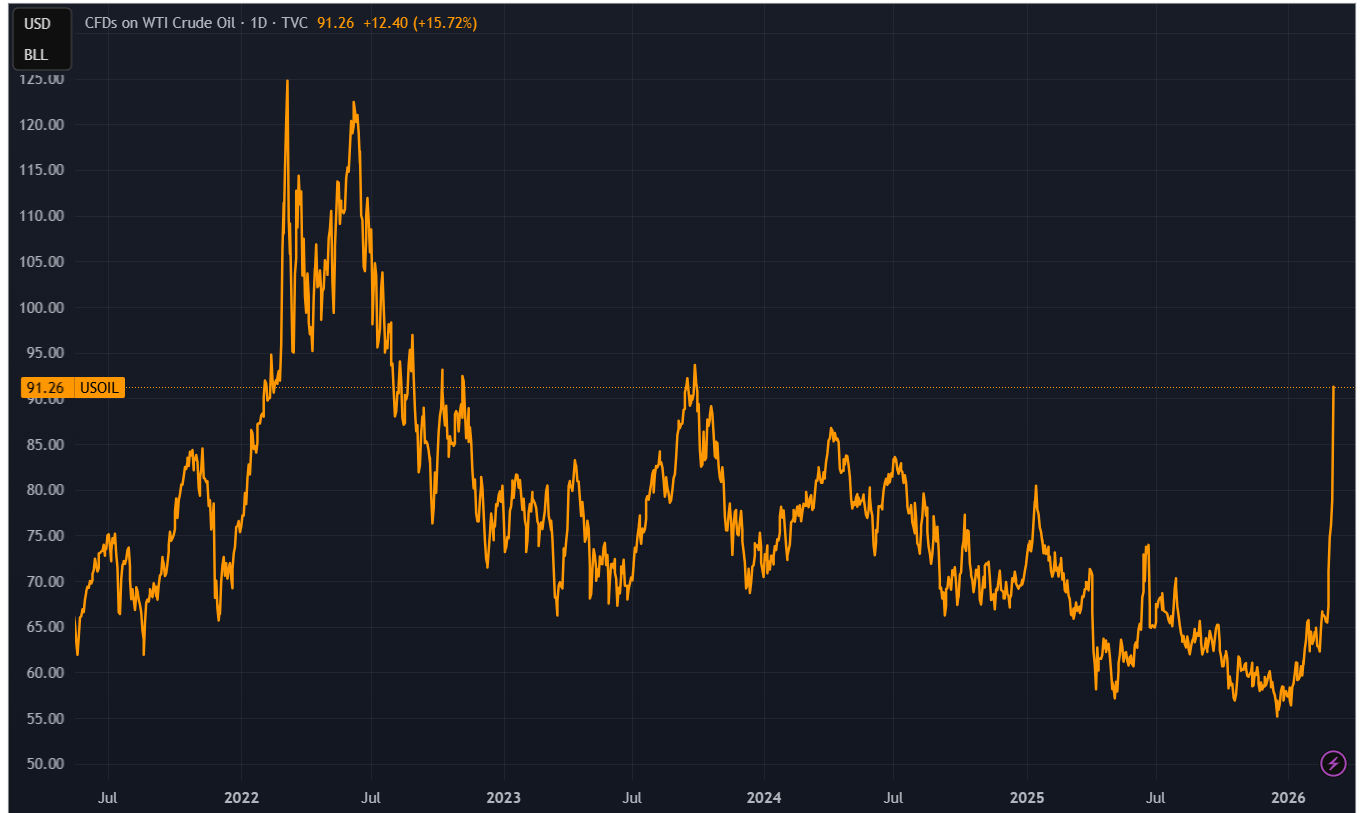
Analysts warn that prolonged disruption could push prices to $100–200, risking global recession, especially for oil-dependent Asian economies like China, India, Japan, and South Korea.
Rising Food and Fertilizer Prices
Beyond oil, the conflict threatens global food security. The Gulf region is a major hub for fertilizer exports (urea, ammonia, and phosphates), with up to one-third of the world supply transiting the Strait.
Fertilizer prices have surged 25%+ in days, with US import hubs seeing jumps from ~$516 to $683 per metric ton. Higher energy and transport costs compound this, potentially raising grocery bills worldwide and exacerbating hunger in vulnerable countries.
Market Turmoil Worldwide
Financial markets have reacted sharply to the energy shock, with stock indices facing volatility and recession fears mounting.
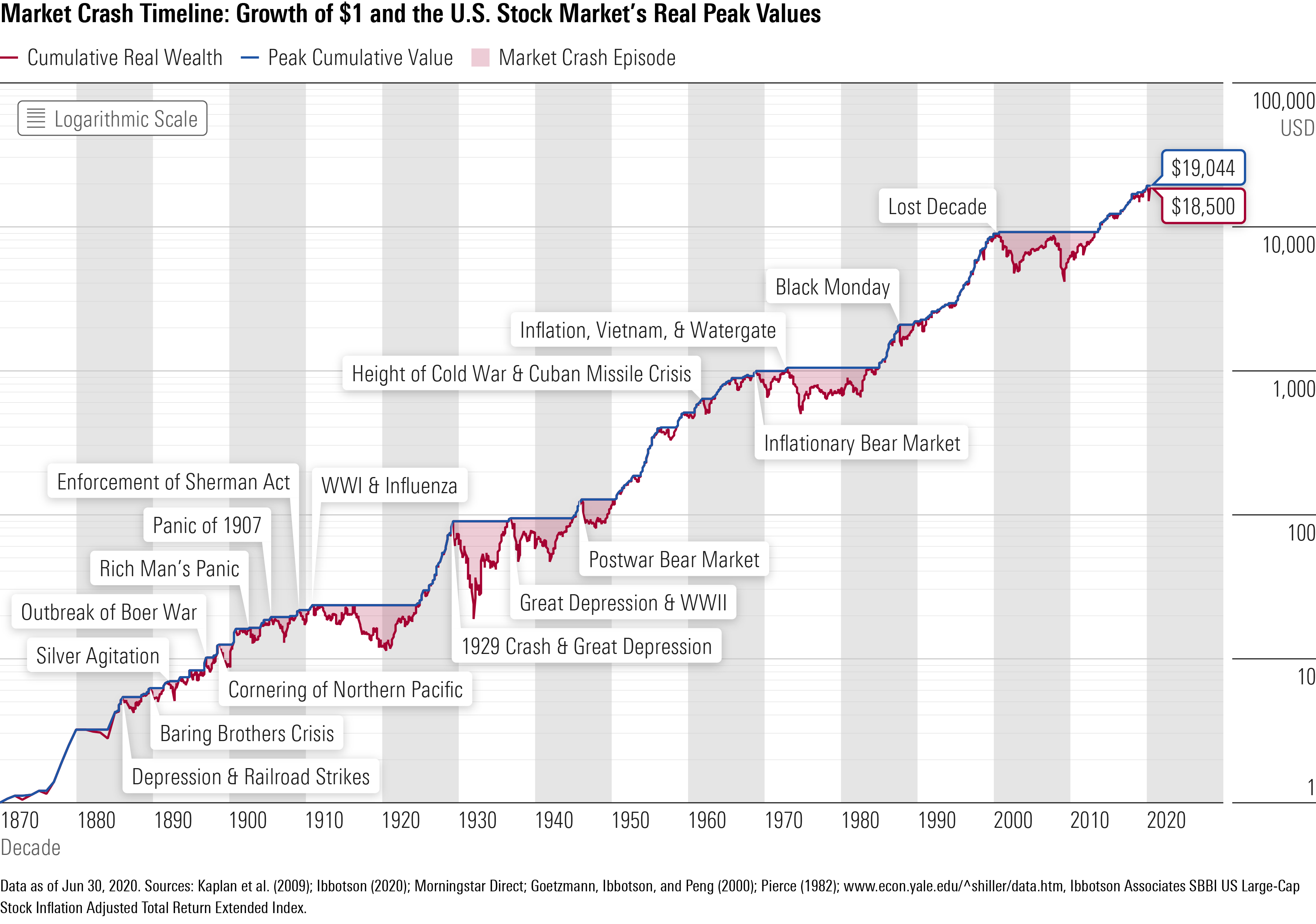
What Prior Market Crashes Taught Us in 2020 | Morningstar
The disruption compounds existing pressures from trade tensions and prior crises, threatening broader economic stability.
UN Warnings: Region at Breaking Point
UN Secretary-General António Guterres has described the Middle East as being “pushed to the breaking point,” warning of cascading global consequences, including disrupted trade, soaring energy/food prices, and deepening instability.
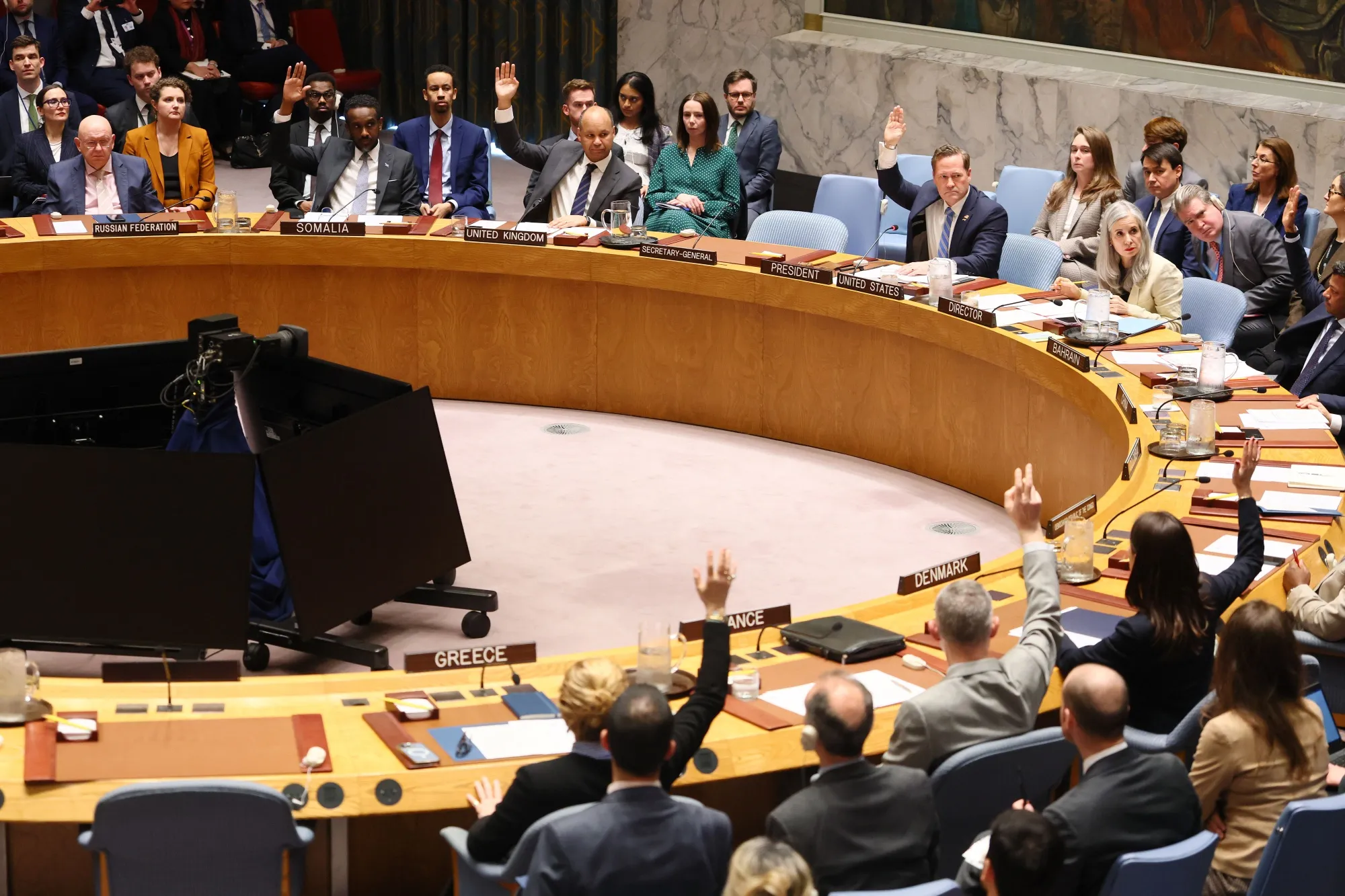
He urged all parties to cease hostilities, protect civilians, and return to diplomacy. UN experts condemned attacks as violations of international law and called for an immediate ceasefire and peace conference.
Hamas’s Position Amid Escalation
In a notable statement, Hamas—a key Iranian ally—urged Iran to halt attacks on neighboring Gulf states while defending Tehran’s right to resist US/Israeli “aggression.” This rare appeal highlights regional divisions and efforts to contain spillover.
The situation remains fluid, with high risks of wider economic pain and escalation. Diplomatic efforts, including calls for multinational naval presence to secure shipping, are intensifying—but the path to resolution appears uncertain.